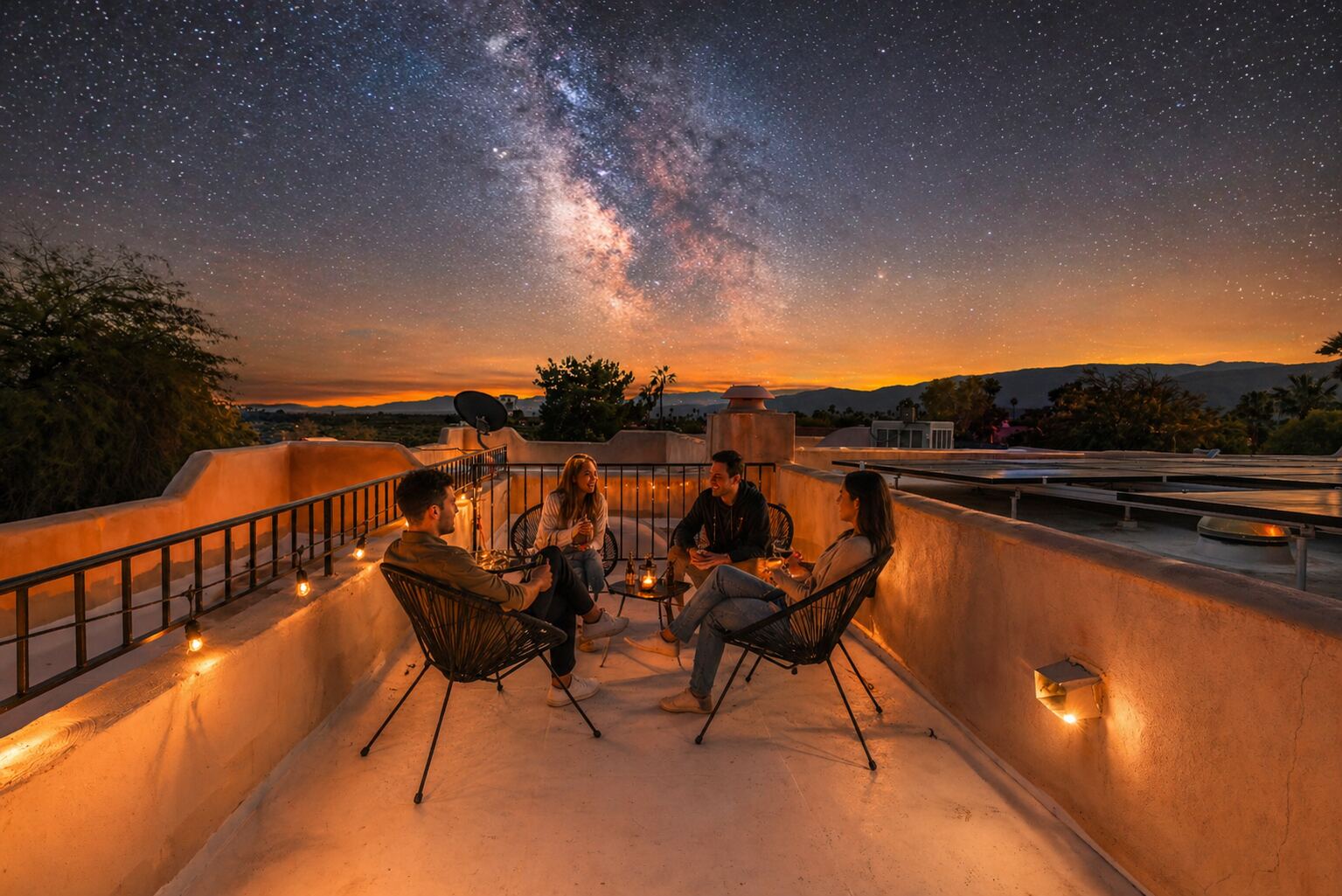
What the sky is actually like
Naked-eye limiting magnitude reaches roughly 6.8 on a clear, moonless night. The summer Milky Way core, the Andromeda Galaxy, the zodiacal light, and faint airglow on the horizon are all visible without equipment. The valley is ringed by mountains that block any glow from San Diego, Palm Springs, and the Coachella Valley.
The full guide is on the stargazing page.
The setup
- Rooftop deck with an unobstructed 360° horizon.
- 8-inch Dobsonian telescope on site.
- Laminated star charts and a copy of Turn Left at Orion.
- Red-light flashlights for the group.
- Reclining loungers — the right way to look up is flat on your back.
- Kiva fireplace and firepit for the cold months.
When to come
- May–August. Peak Milky Way season. Galactic core high above the southern horizon all night.
- August. Perseid meteor shower.
- November–December. Longest, darkest nights of the year. Geminid meteor shower mid-December.
- Any moonless October–April night. Mild evenings, sharp skies.
Check the lunar cycle when you book — a full moon washes out the deep sky.
Who it suits
Astrophotographers, astronomy clubs, parents introducing kids to the night sky, anyone who hasn't actually seen the Milky Way in years. Up to 13 guests.
Stay the night
Moonlight Oasis is a 3-bedroom dark-sky residence in Borrego Springs. Sleeps 13.
Check availability →Keep reading